
 (08) 8278 8900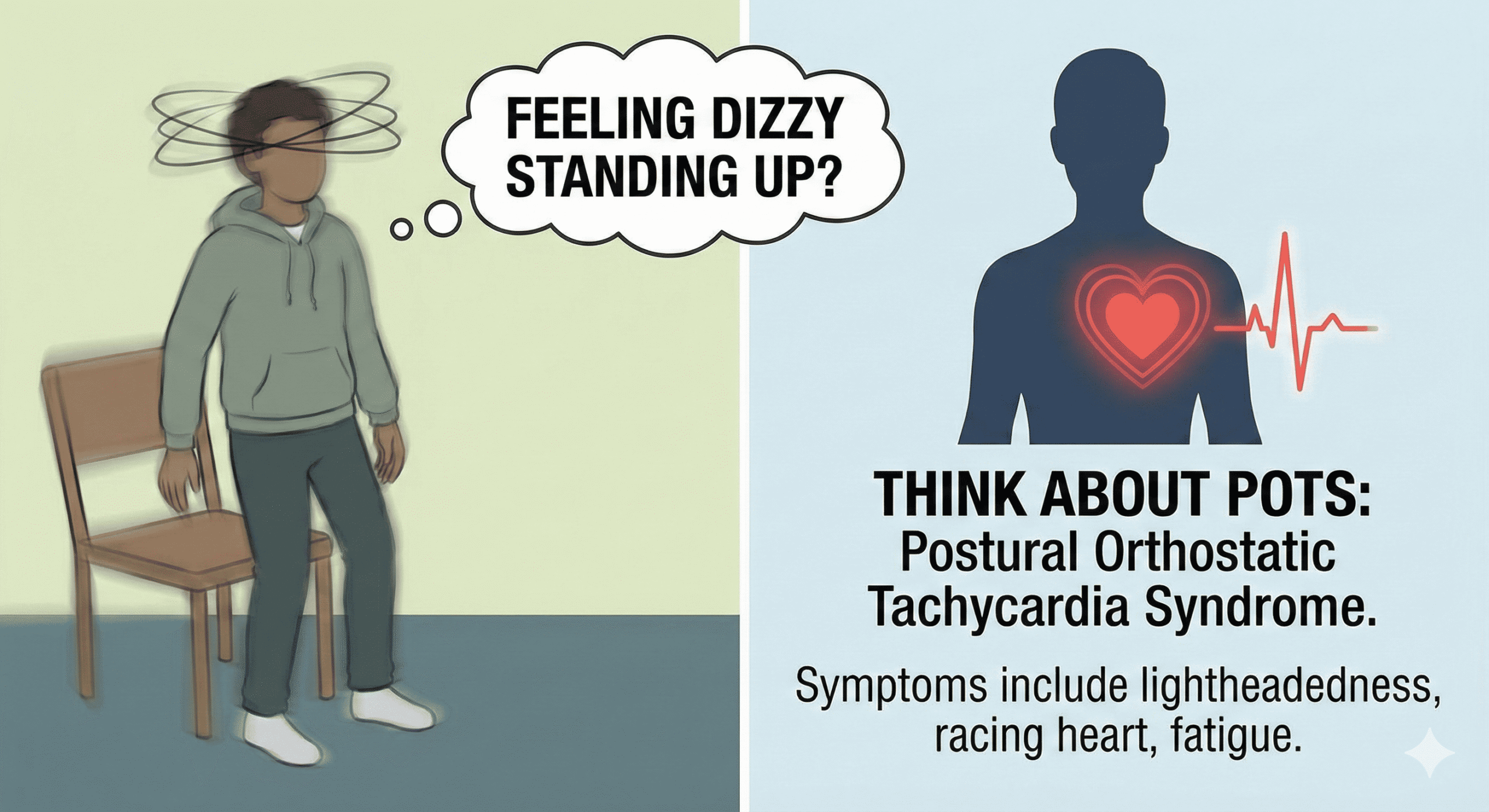
Are You Always Dizzy When You Are Standing Up? When To Think About POTS
Feeling lightheaded when you stand up is something most people experience now and then. But if it happens often, comes with a racing heart, or leaves you feeling physically or mentally exhausted after simple tasks, there may be something else going on.
One condition that is frequently missed or misunderstood is postural orthostatic tachycardia syndrome, more commonly known as POTS.
What Is POTS?
POTS is a condition that affects how the body controls heart rate and blood flow when you move from lying to standing. In people with POTS, standing up causes larger amounts of blood to pool in the lower part of the body, reducing the amount going to the heart and brain.
To compensate, the heart rate increases abnormally, often by more than expected, without a significant drop in the blood pressure. This can lead to a range of symptoms that can be frustrating, disabling and often dismissed.
POTS is more common than many people realise and can affect all ages, more commonly in females and in adolescents or young adults.
Common Symptoms of POTS
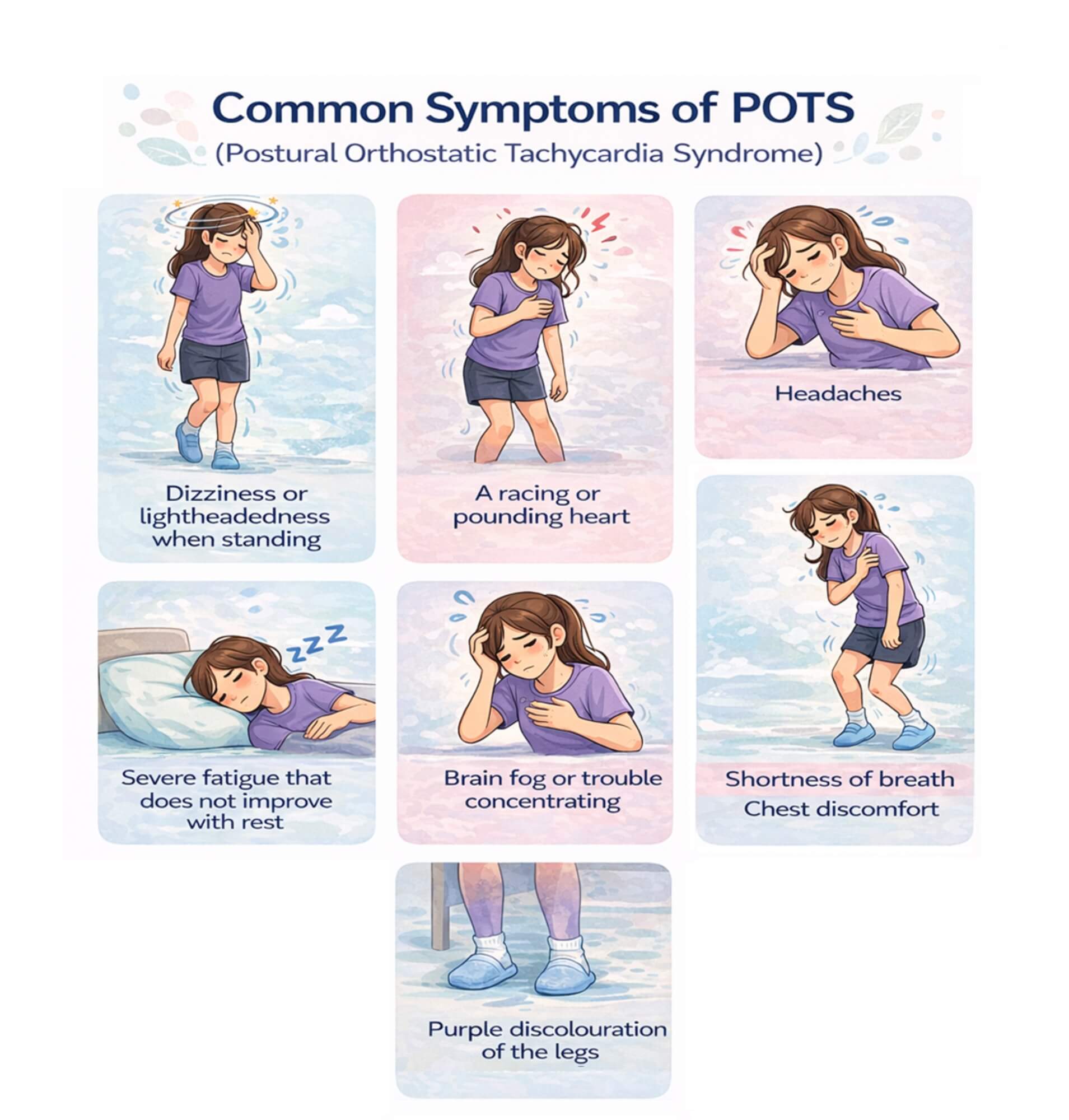
POTS looks different from person to person, but common symptoms include:
Head and Heart
- Dizziness or lightheadedness when standing
- A racing or pounding heart
- Feeling faint
Fatigue and Focus
- Severe fatigue that does not improve with rest
- Brain fog or trouble concentrating
- Exercise intolerance
Chest and Breathing
- Shortness of breath
- Chest discomfort
- Headaches
Physical Discomfort
- Nausea or abdominal discomfort
- Cold hands or feet
- Purple discolouration of the legs
These symptoms can manifest or worsen with standing, heat, dehydration, illness or prolonged activity. Symptoms tend to improve when lying down flat.
Why POTS Is Often Missed
Many people with POTS are told their symptoms are due to anxiety, stress, deconditioning or low fitness. While anxiety can coexist with POTS, it is not the cause.
Because routine tests can appear normal and symptoms can fluctuate, people often go months or years without a clear diagnosis. Being heard and properly assessed makes a big difference.
How POTS Is Investigated and Diagnosed
Diagnosis is based on a combination of symptoms, heart rate response to standing, and exclusion of other conditions. This includes:
- A detailed medical history
- Heart rate and blood pressure measurements lying and standing for 10 minutes
- Blood tests to look for any contributing factors and exclude other medical conditions
- ECG or other heart monitoring if required
- Referral to other non-GP specialists if required
Diagnosis does not rely on a single test. It requires careful, comprehensive assessment and follow up.
Managing POTS Is Possible
While there is no single cure for POTS, symptoms can often be significantly improved with the right support. Management may include:
- Increasing fluid intake
- Increasing salt intake
- Compression garments
- Graduated exercise programs
- Medication when needed
- Managing and minimising triggers such as heat and prolonged standing
- Referral to a POTS-informed dietician, exercise physiologist or psychologist
- Referral to non-GP specialist if required
Education and reassurance are also crucial. Understanding what is happening in your body can be empowering.
Patient Resources
If you suspect you may have POTS, gathering information is a great first step. We recommend the following resources:
MALMO POTS Questionnaire
Download and complete the questionnaire to help assess your symptoms.
POTS Foundation
For further reading on daily management and coping strategies, visit the POTS Foundation.
Why Seeing a POTS Aware Clinic Matters
POTS management works best when clinicians understand the condition.
At Belair Family Health Centre, our GPs are POTS aware and experienced in assisting with investigation, diagnosis and ongoing management. Our clinic nurses are also POTS informed and play an important role in supporting patients through monitoring, education and care planning.
When to See Your GP About Possible POTS
You should consider a review if you:
- Feel dizzy or faint most times you stand
- Have a racing heart without a clear reason
- Feel exhausted after simple daily activities
- Have symptoms that improve when lying down
- Have been told tests are normal but still feel unwell
Early assessment can reduce frustration and help guide the right management plan.
Ready to Seek Support?
If your symptoms have been brushed off or you feel something is not right, it is worth seeking care from a clinic that understands POTS.
At Belair Family Health Centre, we are committed to listening to your concerns and providing comprehensive care.
The Take Home Message
POTS is real. It is common. And it is manageable.
If your symptoms have been brushed off or you feel something is not right, it is worth seeking care from a clinic that understands POTS.